Chip stocks sink as AI trade cools, hedge funds cut exposure and leveraged liquidations hit linked crypto perps
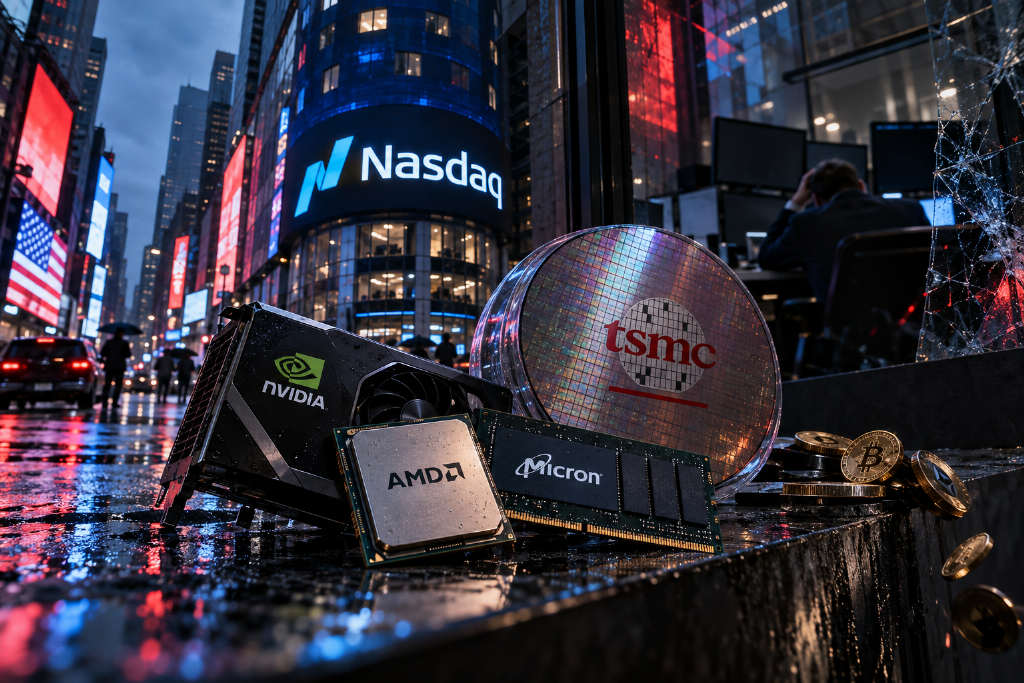
Nvidia CEO Jensen Huang’s latest defense of memory demand failed to spark the kind of rally markets had rewarded before. Speaking during GTC in Berlin on Oct. 21, Huang said the chance of a memory glut before 2029 was low. A day later, U.S. tech shares sold off sharply: the Nasdaq Composite fell 2.6%, its biggest one-day drop since June, while the Philadelphia Semiconductor Index lost about 6.72%. Nvidia, AMD, Intel, Micron, TSMC and Meta all moved lower. The pullback had been building. Goldman Sachs prime brokerage data showed hedge funds had been cutting technology exposure, with semiconductors among the biggest areas of selling, even as retail investors kept buying chip, storage and AI cloud names. Citadel founder Ken Griffin said investors could be "almost certain" there was an AI bubble, while Michael Burry shifted much of his bearish options exposure toward Nasdaq 100 and semiconductor ETF puts. Jim Chanos, for his part, targeted newer cloud companies that borrow to build data centers and rent out AI compute. The pressure also spilled into crypto-linked leveraged products. CoinDesk, citing CoinGlass, reported that on Oct. 17, during a U.S. stock market holiday, crypto perpetual futures tied to chip stocks and semiconductor ETFs saw about $51.6 million in liquidations in 10 minutes, including roughly $38 million from longs. The episode added another sign that AI-related trading now stretches across round-the-clock leveraged markets.